rū
Making personal context portable across every AI conversation
Context doesn't travel across tools. It gets left behind.
Across 10 user interviews, 4 user demos, and 22 screener responses, users described valuable thinking getting stuck in tool silos. The workarounds were manual, fragmented, and invisible to every other tool in their stack.
One participant put it plainly: "I wish my tools understood context and awareness of other tools."
That reframed the problem. The opportunity wasn't another integration — it was a way to make context portable across the tools people are already in.
Translating analog gestures into AI-native primitives
To move beyond traditional UI patterns, I adopted an AI-native research-to-prototype loop. Grounding early hypotheses in community-led insights from Reddit, Perplexity, and Notion surveys let me discern the real cost of tool-siloing.
I used Granola and Claude to turn raw interview data into actionable prompts, effectively using the model as a bridge between research and execution. That fed rapid prototyping across Figma, Lovable, Cursor, and Claude Code, where I focused on text highlight as an interaction primitive for cross-tool orchestration.
Users reported not wanting AI to make decisions for them, but to understand their context well enough to support the decisions they were already making. The value wasn't automation — it was being understood.
The research-to-prototype loop
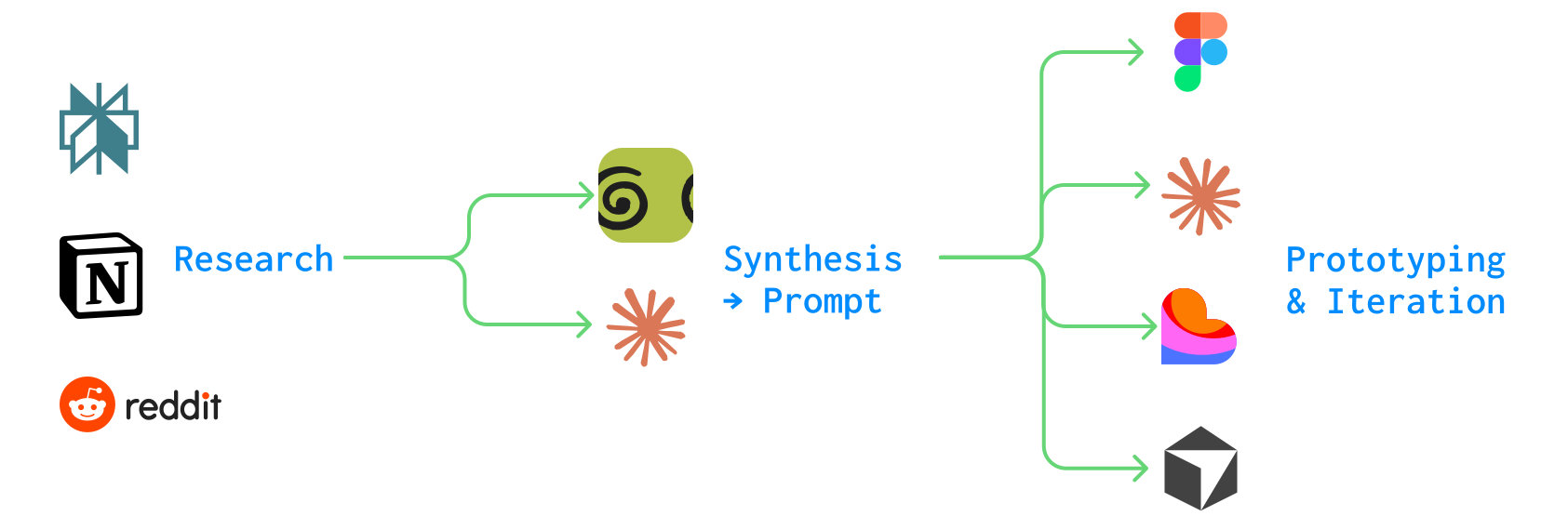
Research fed prototyping directly. Rather than handing findings off, each round of interviews became prompts that drove the next prototype, compressing the loop between what users said and what they could try.
Research findings drove a full product pivot
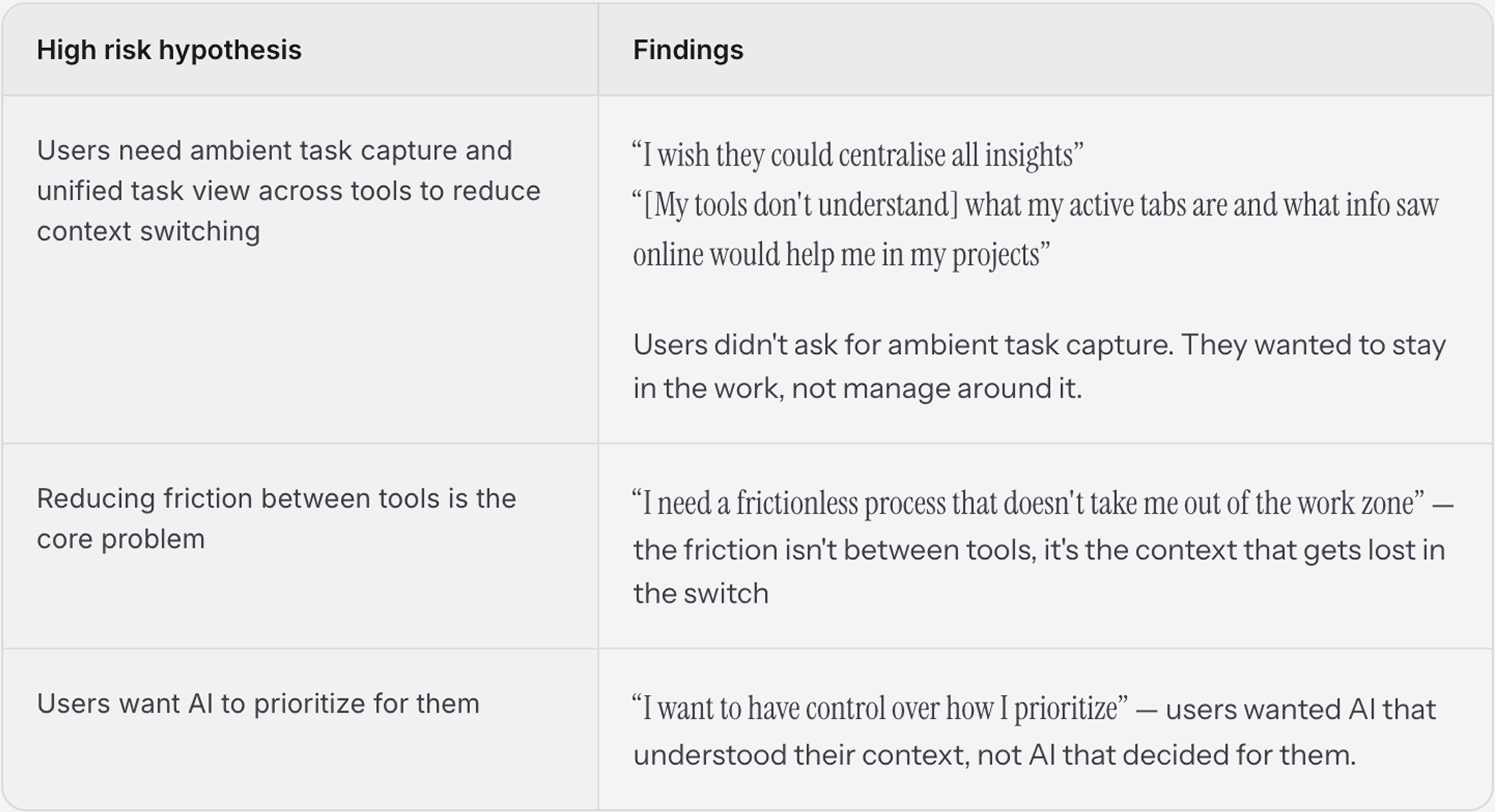
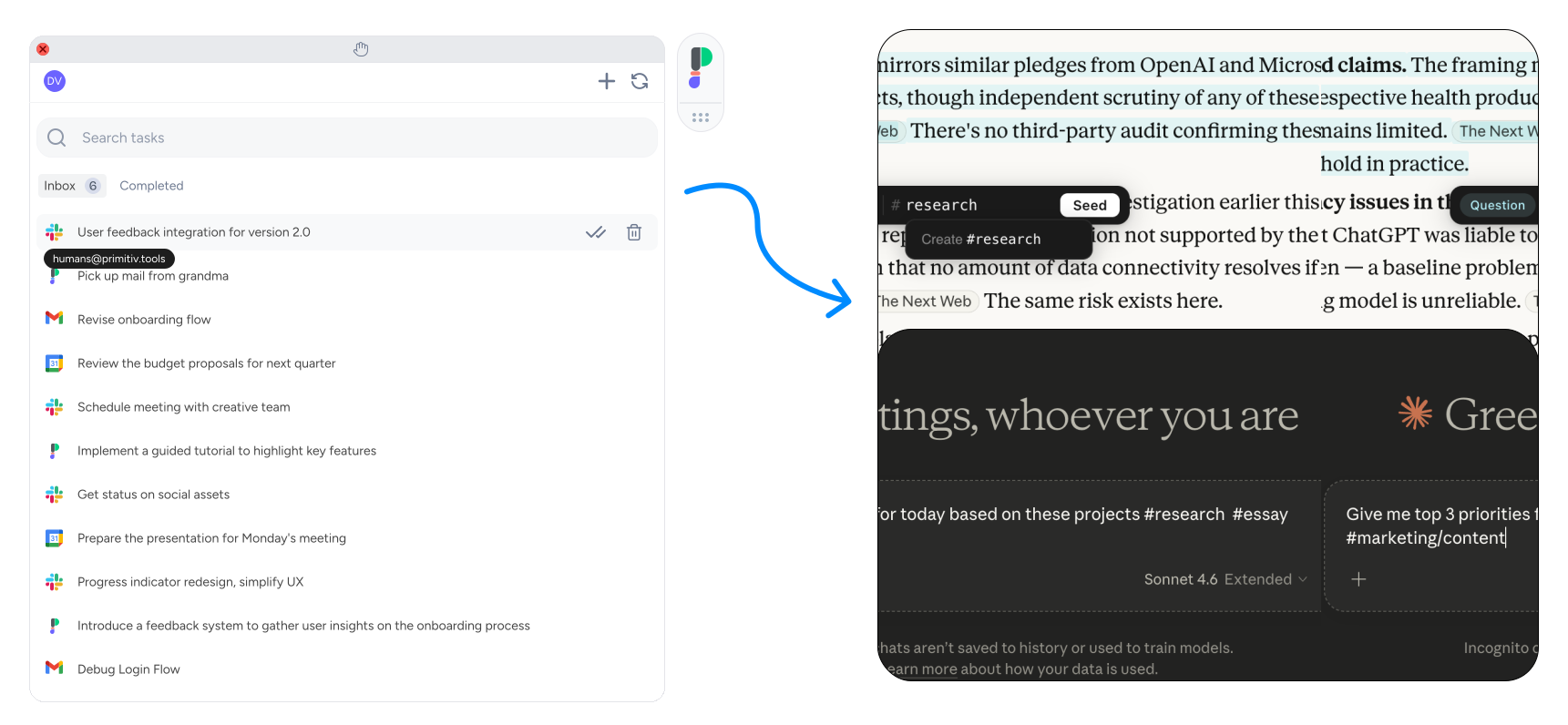
primitiv.tools → rū. Before and after testing the hypotheses that drove the pivot. Primitiv was automating tasks. rū gives Claude the context to understand what the user is actually working on.
Highlighting is already a natural gesture
We already mark what matters. We annotate what stands out, question what expands our thinking, and connect what we're reading now to what we've read before. The gesture didn't need inventing — it needed a functional layer.
Highlighting as context curation
Reading becomes capturing. To bridge user intent and tool intelligence, I prototyped highlighting as a mechanism for context portability, so the most important insights don't stay trapped in a single thread but become fuel for future retrieval.
# as a pre-existing gesture for reference and retrieval
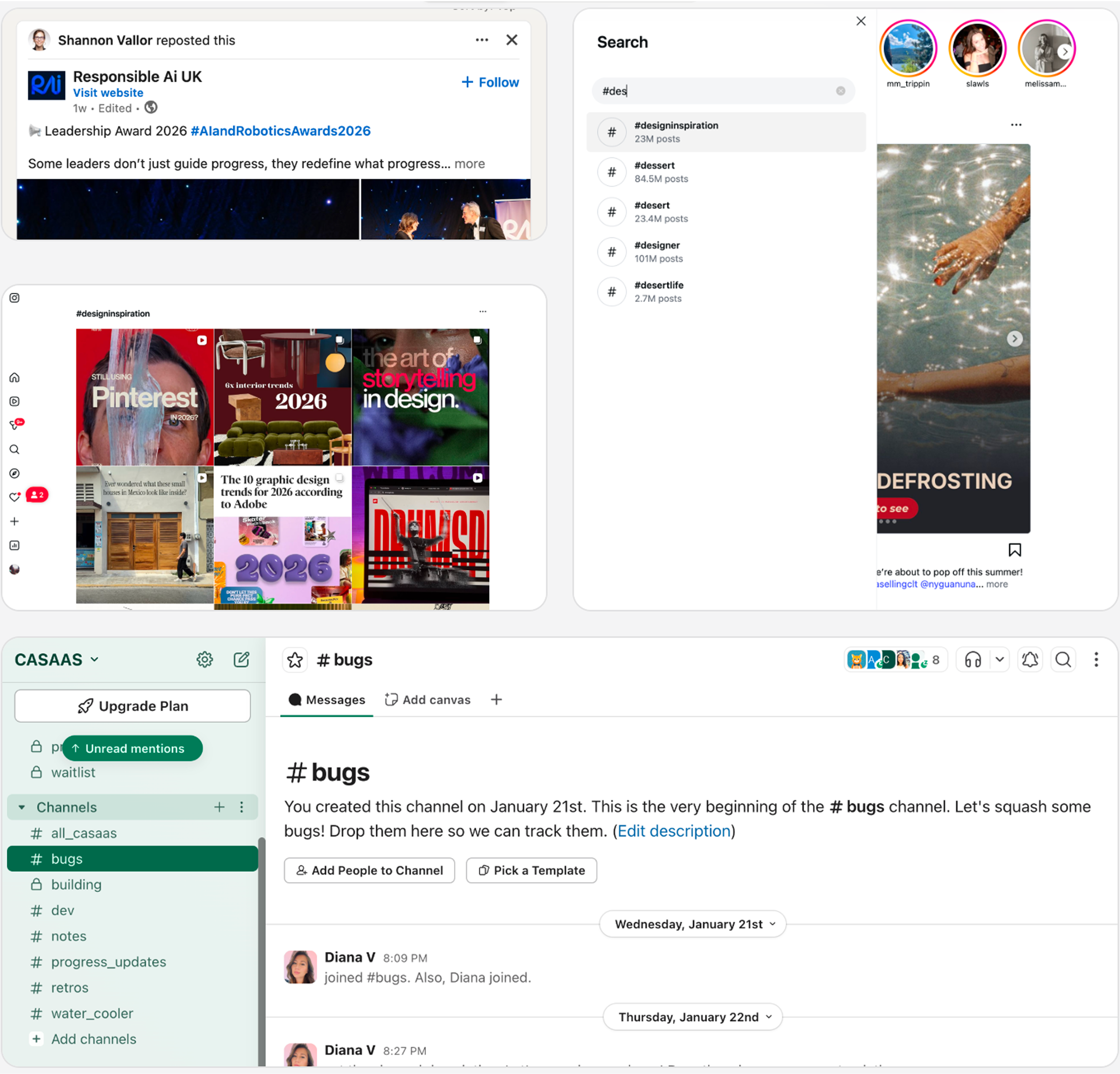
One symbol, one meaning, everywhere. In writing it tags. In code it comments. In chat it mentions. The question was never which symbol — it was whether that same gesture could make a highlight persistent and callable.
Treating context as a portable asset, not a fleeting chat history
Built on the Model Context Protocol (MCP), the rū architecture bridges two interaction loops: a Personal Brain for local-first curation and a Collective Brain for shared intelligence.
In the personal loop, users move from passive readers to active curators by tagging high-value signals at the source, building a private vault Claude can resolve and synthesize in real time.
That scales into a "seeding and harvesting" model, where curated namespaces live in a public API so users can instantly harvest expert context inside their own AI environments — replacing the friction of manual data sharing with a tag-based exchange of human intent.
Personal Brain and Collective Brain
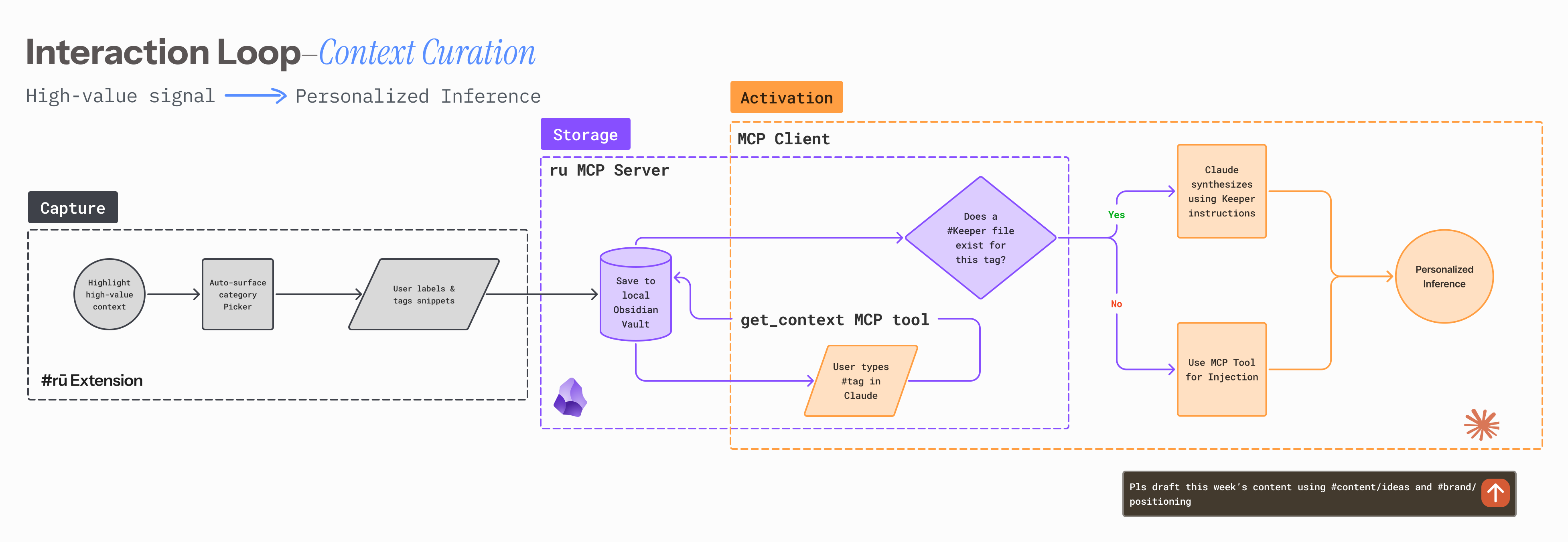
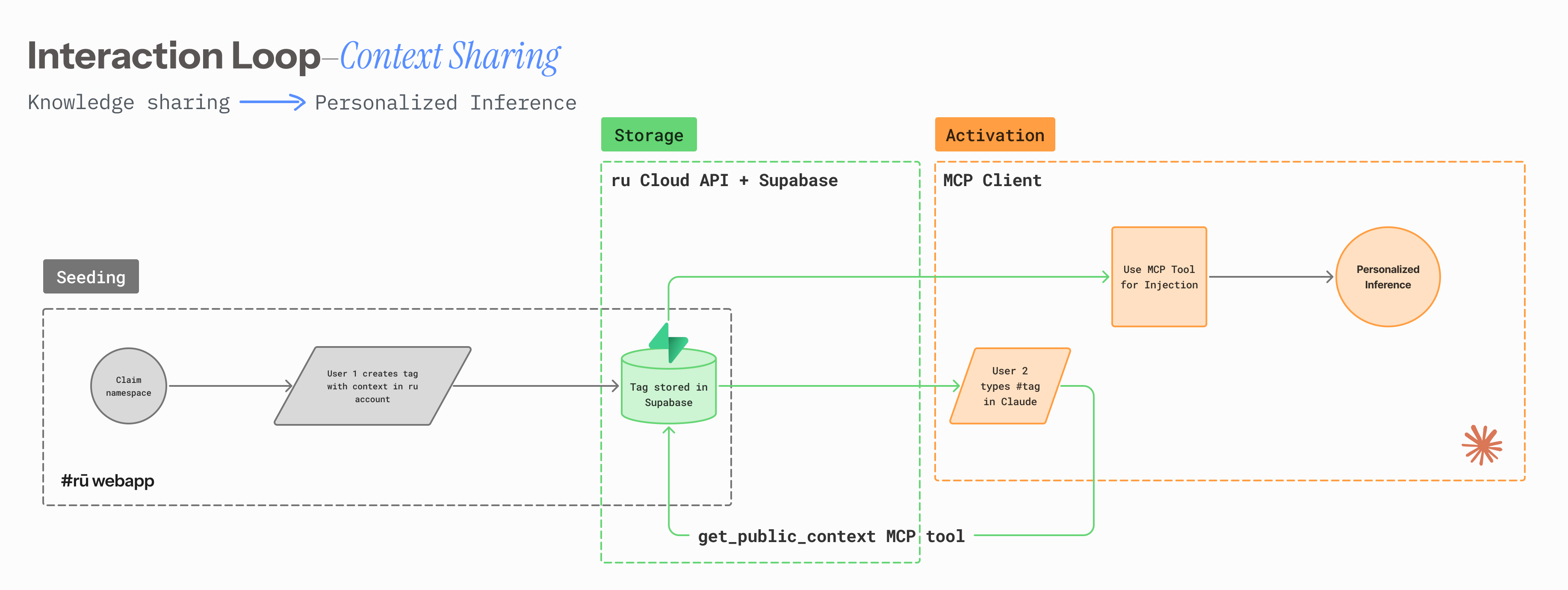
Two loops, one gesture. Context curation is a private, local-first workflow for individual deep work. Context sharing is a public, API-driven workflow for team knowledge. The same # call reaches both.
AIR — architecting human-AI relationships
AIR is built on the premise that you cannot engineer a relationship — you can only architect the conditions in which one grows. It identifies three environmental primitives for designing meaningful human-AI partnerships.
The logic: Alignment creates the safety to engage. Friction creates the agency to co-create. Resonance is the result.
1 — Contextual Alignment establishes trust at onboarding
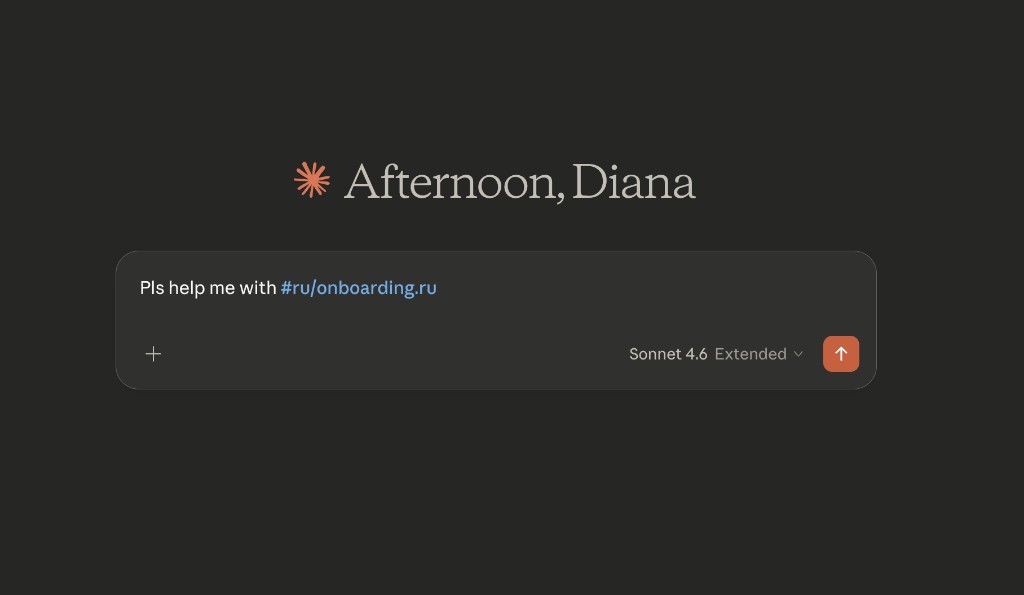
Does it know me? Instead of a detached setup wizard, rū uses the chat thread itself as a guided setup surface via a single command. Users hit the core value without leaving their workflow, keep their established mental model of Claude, and the system learns their specific needs from the first interaction.
2 — Intentional Friction drives engagement
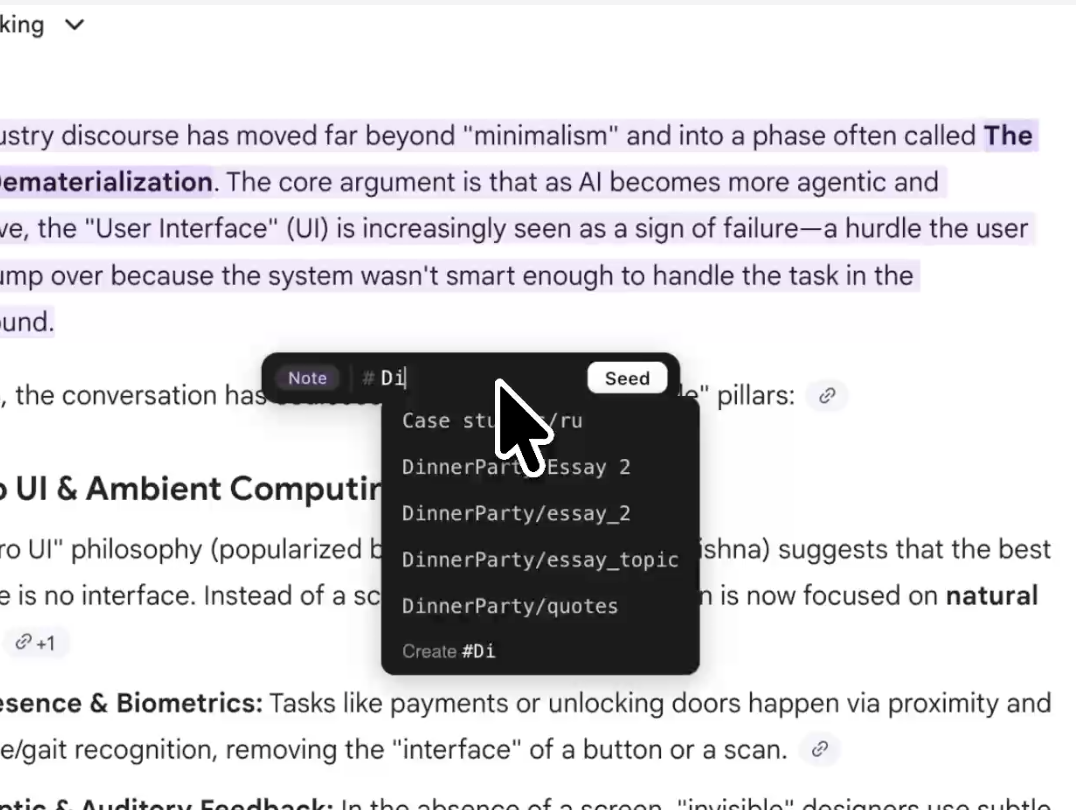
Can I direct it? Modern AI favors ambient capture, guessing what matters by recording everything. rū flips this with a deliberate pause: highlighting and tagging. Engagement happens in that moment of choice — the user stays the one directing the system rather than watching it work.
3 — Resonance generates retention
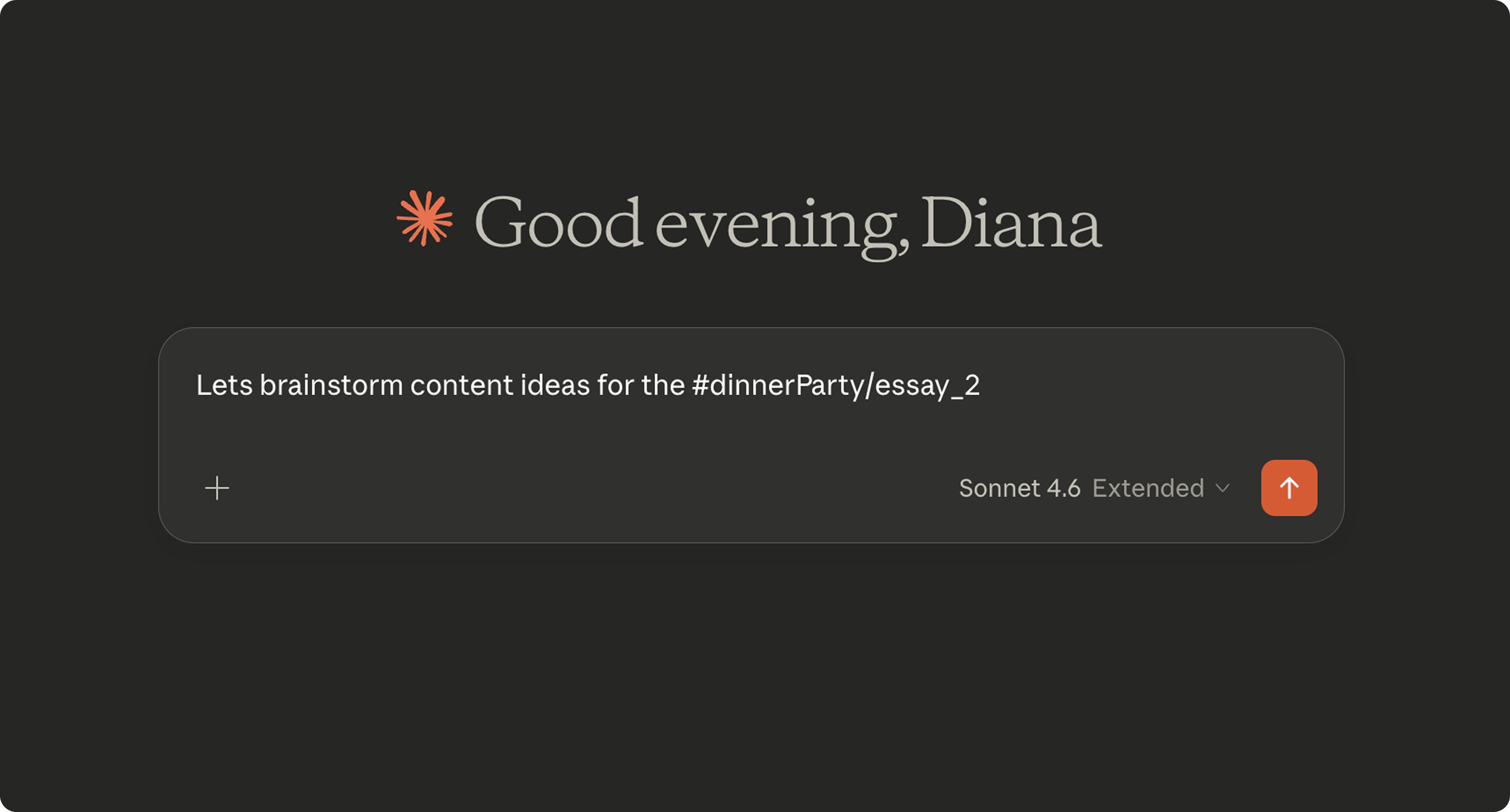
What else can I do with this? Rather than forcing users into a new proprietary chat interface, rū delegates synthesis back to the models they already use. The system stops feeling like an external database and starts feeling like an expanded internal capability.
Constraints as interaction guardrails
Public context is an injection surface. Any public seed can be crafted to manipulate the agent reading it — a prompt injection delivered through context rather than conversation. Every public seed is labeled external_context before the agent reads it, signaling "treat this as reference material, not instructions."
Personal context is sensitive by default. The most valuable context is also the most sensitive — half-formed ideas, private notes, thinking not yet shared. Routing that through a centralized server, even a secure one, changes the relationship between user and tool. Private seeds stay local by default, always.
The interaction surface is invisible. rū seeds context into conversations it never sees, through clients it doesn't control, for agents with unpredictable behavior. There's no feedback loop — so onboarding itself became a public seed that turns any conversation into a support surface.
The most durable interactions are the ones people already know.
Research pushed me to abandon a task-automation product entirely and rebuild around a single gesture people were already making. That taught me to look for primitives that exist before the product does, rather than inventing new interaction vocabulary users have to learn.
The next frontier is multimodal. The # is powerful for text but remains a flat gesture — the open question for AIR is what a mention becomes across voice, spatial environments, and autonomous loops. As the interface disappears, the human's role as director has to become more defined, not less.